
Resident Information
Welcome to the Residents page. You will find relevant information for residents of all Fort Walton Beach Housing Authority communities. Check back often for updates.
-
Catholic Charities
www.ccnwfl.org
11 First St., Ft. Walton Beach, FL 32548
850.244.2825
Rent, Utilities, and Food Assistance -
Early Learning Coalition
www.elc-ec.org
107 Tupelo Avenue, SE, Ft. Walton Beach, FL 32548
850.833.3627
Childcare Assistance -
Elder Services of Okaloosa
www.elder-services.org
207 Hospital Drive, Ft. Walton Beach, FL 32548
850.833.9165
Elderly Services -
Emerald Coast Rider (County Bus)
www.ecrider.org
600 Transit Way, Ft. Walton Beach, FL 32548
850.833.9168
Transportation -
Fresh Start
www.freshstartfl.com
8 Bobolink St., Ft. Walton Beach, FL 32548
850.243.5648
Transitional Housing, Counseling, Food
-
FWB Health Department
okaloosa.floridahealth.gov
221 Hospital Drive, Ft. Walton Beach, FL 32548
850.833.9240
Health and Wellness -
Harvest House
www.harvesthousedestin.org
300 Mountain Drive, Destin, FL 32541
850.837.2277
Food, Clothing -
Homelessness and Housing Alliance
www.hhalliance.org
183 Eglin Parkway, Ft. Walton Beach, FL 32548
850.499.4879 or 850.499.4609
Help streamline Housing Assistance -
HUD
www.hud.gov -
Legal Services of NWFL
www.lsnf.org
133 Staff Drive Ste. B, Ft. Walton Beach, FL 32548
850.862.3279
Legal Services
-
NAHRO
www.hud.gov -
PHADA
www.hud.gov -
Senior Housing for Low-Income Residents
SeniorHomes.com -
Sharing and Caring
www.sharing-n-caring.org
126 SW Beal Parkway, Ft. Walton Beach, FL 32548
850.244.0778
Food, Prescriptions -
Shelter House
www.shelterhousenwfl.org
16 Ferry Road, Ft. Walton Beach, FL 32548
850.243.1201
Shelter & Counseling (DV) -
S4P Synergy
www.strivinghome.org
24 Bass Avenue, Ft. Walton Beach, FL 32548
850.362.6377
Rent, Utilities, Food
Maintenance
- Eric Parker
Emergency Maintenance
Maintenance staff is allowed to respond during non-business hours only to true emergency situations. Work order charges may be applied in certain cases. Emergency maintenance work orders are only for repair needs that threaten the life, health, or safety of a resident or could cause extreme damage to the property.
- Gas Leak - If you suspect a gas leak, always leave the unit and call Okaloosa Gas at 850.729.4700 In the event that Okaloosa Gas determines that repairs must be made, you should call the Emergency Work Order Line.
- Water Heater Leaking - no hot water is not an emergency response item.
- Plumbing Leak Sufficient to Cause Damage to Property
- Clogged Sink - if at least one sink in the unit is functioning properly, an emergency response will not be made.
- Clogged or Broken Toilet - if the unit has two bathrooms, repairs will be made the next business day unless both toilets are not functioning. The tenant must attempt to clear the clog with a plunger before calling the emergency number.
- Exterior Door and/or Window Cannot Be Locked
- Window Glass Broken Completely Out
- Major Damage to Structure
- Ceiling/Roof Leaking
- Emergency Entry Into Apartment – Charge applies if the door lock is working properly. Proof of occupancy must be provided (photo identification with matching address or another method).
- Refrigerator AND Freezer Not Functioning
- Smoke Alarm Not Functioning Properly
- Unit Heat Not Functioning (during outside temperatures below 50 degrees)
- Air Conditioning Not Functioning (during outside temperatures above 90 degrees)
- Electrical Wires Exposed From Fixture (outlet, switch, light fixture)
- No Electrical Power in Unit - Tenant must check breaker box before calling emergency work order number.
Maintenance Charges
Normal/After Hours
Resident Schedule of Charges List Revised
As stated in HUD Federal Regulation 24 CPR§ 966.5 Posting of policies, rules and regulations, schedules of special charges for services, repairs and utilities and rules and regulations which are required to be incorporated in the lease by reference shall be publicly posted in a conspicuous manner in the Development Office and shall be furnished to applicants and tenants upon request. This regulation further provides that such schedules, rules and regulations may be modified from time to time by the PHA provided that the PHA shall give at least a 30-day written notice to each affected tenant setting forth the proposed modification, the reasons therefore, and providing the tenant an opportunity to present written comments which shall be taken into consideration by the PHA prior to the proposed modification becoming effective.
24 Code of Federal Regulations § 966.4(b) (2) PHA charges provide in relevant part that the lease shall provide for charges to the tenant for maintenance and repair beyond normal wear and tear and for consumption of excess utilities. This regulation further provides that the lease shall state the basis for the determination of such charges (e.g., by a posted schedule of charges for repair). Additionally, 24 CFR § 966.4) (±)(10) obligates the tenant to pay reasonable charges (other than for normal wear and tear) for the repair of damages to the dwelling unit, or to the development (including damages to development buildings, facilities or common areas) caused by the tenant, a member of the household or a guest.
- Outside contractor or services - At Cost
- Replace appliance(s) due to resident caused fire, severe neglect, theft - At Cost ( or may be less depreciation plus labor)
- Unlock Door - During Working Hours - $10.00
- Unlock Door - Non-working Hours - $50.00
- Replace lost key - $5.00
- Change Locks - Parts plus labor
- Return Check Fee (NSF) - At Cost
- Clean yard after notice - $35.00
- Remove Tenant Property from roofs and/or trees, furnishings and debris from unit - $60.00 per load & Dump/Disposal fee if applicable
- Clean Apartment (Vacant Unit) - $50.00 (plus minimum 2 hour labor)
- Clean Range (Vacant Unit) - $25.00 plus labor
- Clean Refrigerator (Vacant Unit) - $25.00 plus labor
- Paint/Wall Repair for damages occurring while occupied - Materials plus labor
- FWBHA unclogging sink, toilet, tub, or washer drain During normal working hours - $35.00 per occurrence (plus labor and parts)
- FWBHA unclogging sink, toilet, tub, or washer drain Non-working hours - $60.00 per occurrence (plus labor and parts)
- Remove Satellite Dish - $50.00 per occurrence
- Remove TV Cable - $40.00 per occurrence
- Replace Resident Parking Decal - $25.00 per occurrence
- Replace drip pans - At cost plus labor
- Replace electrical cover plates - At cost plus labor
- Replace light bulbs - At cost plus labor
- Replace Broken Windows During Working Hours - Minimum 1 hour labor plus parts
- Replace Broken Windows Non-working Hours - Minimum 2 hours labor plus parts
- Move trash receptacles - $10.00
- False Alarm Emergency Work Order Call-in During Working Hours - Minimum 1 hour labor plus parts
- False Alarm Emergency Work Order Call-in Non-working Hours - Minimum 2 hours labor plus parts
- Parking or Driving on Grass - $50.00 per occurrence
- Pet Waste Removal - $50.00 per occurrence
- Smoke Detector Tampering/Damaged - $50.00 per occurrence
- Smoking on campus - $50.00 per occurrence
- Miscellaneous damage to property - Parts plus labor
- Unauthorized Pet - $50.00
Pet Deposit $300.00
Monthly Fee $ 10.00
Disaster Preparedness
In the event of a hurricane or other disaster, The Fort Walton Beach Housing Authority will take action that allows us to protect our tenants and property to the extent possible. It is very important that you stay informed of hurricane activity. Follow the instructions provided by law enforcement, elected officials, and other professionals regarding evacuation and other safety measures before, during, and after a hurricane. The information below is provided to assist you in preparing for a hurricane or other natural disaster.
- American Red Cross Hurricane Safety
- Florida Disaster Supply Checklist
Emergency Contact Phone Numbers
- Police, Sheriff, Fire, Ambulance, Highway Patrol: 911
- Utility Company (Florida Power and Light): 800.468.8243
- Natural Gas Company (Okaloosa Gas): 850.729.4700
- Waste Management: 850.862.7141
- Health Department: 850.833.9245
- Panhandle Animal Welfare Society: 850.244.0196
- Mosquito Control: 850.651.7394
- FEMA: 800.525.0321 or 800.660.8005
- Red Cross: Fort Walton Beach – 850.314.3016
- Red Cross: Crestview – 850.682.3356
- FL Dept. of Emergency Management: 850.413.9900
- Citizen Information Line when EOC is activated: 850.651.7583
- Okaloosa County Emergency Management: 850.651.7150
Assemble A Disaster Kit
You may need to survive on your own after a disaster. This means having your own food, water, and other supplies in sufficient quantity to last for at least three days. Local officials and relief workers will be on the scene after a disaster, but they cannot reach everyone immediately. You could get help in hours, but it could take days.
Basic services such as electricity, gas, water, sewage treatment, and telephones may be cut off for days, a week, or even longer. Or you may have to evacuate at a moment’s notice and take essentials with you. You probably will not have the opportunity to shop or search for the supplies you need.
Kit Locations
- Home: Your disaster supplies kit should contain essential food, water, and supplies for at least three days. Keep this kit in a designated place and have it ready in case you have to leave your home quickly. Make sure all family members know where the kit is kept and can lift and carry the kit. Additionally, you may want to consider having supplies for sheltering for up to two weeks, and plan for possible power outages at home.
- Work: This kit should be in one container, and ready to “grab and go” in case you are evacuated from your workplace. Make sure you have food and water in the kit. Also, be sure to have comfortable walking shoes at your workplace in case an evacuation requires walking long distances.
- Car: In case you are stranded, keep a kit of emergency supplies in your car. This kit should contain maps, food, water, manual can opener, first aid kit, and manual, flares, jumper cables, flashlight and extra batteries, fire extinguisher (5lb., A-B-C type), blanket, rain gear, and seasonal supplies.
Water
How much water do I need? You should store at least one gallon of water per person, per day. A normally active person needs at least one-half gallon of water daily just for drinking. In determining adequate quantities, take the following into account:
- Individual needs vary, depending on age, physical condition, activity, diet and climate.
- Children, nursing mothers, and ill people need more water.
- Very hot temperatures can double the amount of water needed.
- A medical emergency might require additional water.
- Water is used for sanitation needs as well as for drinking.
How should I store water? To prepare the safest and most reliable emergency supply of water, it is recommended that you purchase commercially bottled water. Keep bottled water in its original container and do not open it until you need to use it. Be sure to observe the expiration or “use by” date.
If you are preparing your own containers of water: It is recommended that you purchase food-grade water storage containers from surplus or camping supplies stores to use for water storage. Before filling with water, thoroughly clean the containers with dishwashing soap and water, and rinse completely so there is no residual soap. Follow directions below on filling the container with water.
If you choose to use your own storage containers, choose two-liter plastic soft drink bottles – not plastic jugs or cardboard containers that have had milk or fruit juice in them. Milk protein and fruit sugars cannot be adequately removed from these containers and provide an environment for bacterial growth when water is stored in them. Cardboard containers also leak easily and are not designed for long-term storage of liquids. Also, do not use glass containers because they can break and are heavy.
If storing water in plastic soda bottles, follow these steps: Thoroughly clean the bottles with dishwashing soap and water, and rinse completely so there is no residual soap. Sanitize the bottles by adding one teaspoon of non-scented liquid household chlorine bleach to a quart of water. Swish the sanitizing solution in the bottle so that it touches all surfaces. After sanitizing the bottle, thoroughly rinse out the sanitizing solution with clean water.
Filling water containers: Fill the bottle to the top with regular tap water. If the tap water has been commercially treated from a water utility with chlorine, you do not need to add anything else to the water to keep it clean. If the water you are using comes from a well or water source that is not treated with chlorine, add two drops of non-scented liquid household chlorine bleach to the water. Tightly close the container using the original cap. Be careful not to contaminate the cap by touching the inside of it with your finger. Place a date on the outside of the container so that you know when you filled it.
Food
- Avoid foods that will make you thirsty. Choose salt-free crackers, whole grain cereals, and canned foods with high liquid content
- Stock canned foods, dry mixes, and other staples that do not require refrigeration, cooking, water, or special preparation. You may already have many of these on hand. (Note: be sure to include a manual can opener.)
- Include special dietary needs
Maintaining Your Kit
- Keep canned foods in a dry place where the temperature is cool.
- Throw out any can that become swollen, dented, or corroded.
- Store boxed food in tightly closed plastic or metal containers to protect from pests and to extend its shelf life
- Use foods before they go bad and replace them with fresh supplies.
- Place new items at the back of the storage area and older ones in front.
- Change stored food and water supplies every six months. Be sure to write the date you store it on all containers.
What is a Hurricane?
- Tropical Depression: An organized system of clouds and thunderstorms with defined center of circulation and maximum sustained winds of 38 mph or less.
- Tropical Storm: An organized system of strong thunderstorms with a defined surface circulation and maximum winds of 39-73 mph.
- Hurricane: An intense tropical weather system of strong thunderstorms with a well-defined circulation and maximum sustained winds of 74 mph or greater.
The Difference Between a Watch and a Warning
- Tropical Storm Watch: Tropical storm conditions (sustained winds of 39 to 73 mph) are possible in the specified coastal area within 48 hours.
- Tropical Storm Warning: Tropical storm conditions (sustained winds of 39 to 73 mph) are expected somewhere in the specified coastal area within 36 hours.
- Hurricane Watch: Hurricane conditions are possible within the specified coastal area, but tropical storm force winds may reach the coast within 48 hours.
- Hurricane Warning: Hurricane conditions are expected somewhere within the specified coastal area, but tropical storm force winds will arrive in less than 36 hours.
Hurricane Intensity Ratings
- Tropical Storm (Winds 39-73 mph) Damage is minimal, but scattered trees and power lines may be damaged and brought down, resulting in some power outages.
- Category 1 Hurricane (Winds 74-95 mph) Porches and awnings may be damaged. Older homes may have roof damage. There may be more substantial damage to mobile homes and minor pier and boat damage. Unprotected windows may be broken by flying debris. Large tree branches may snap and shallow-rooted trees can be toppled. Heavy damage is possible to power lines. Low-lying coastal roads will become inundated with water.
- Category 2 Hurricane (Winds 96-110 mph) Some damage to building roofs, doors and windows with considerable damage to mobile homes. Failure of awnings and screened-in enclosures will be common. Some large trees may be blown down. Extensive power outages can be expected as well as coastal roads cut off by water. Major damage to piers and small boats could occur.
- Category 3 Hurricane (Winds 111-130 mph) Some structural damage to small homes is likely. Major damage is likely to coastal structures, with minor to moderate damage possible for inland buildings. Nearly all mobile homes and older small homes could be destroyed. There will likely be major damage to large trees, fences and signs and extensive power loss. Serious coastal flooding is possible throughout the affected area.
- Category 4 Hurricane (Winds 131-155 mph) Total destruction of mobile homes will occur along with wall and roof structure failure on most small homes. Extensive damage is likely to doors, windows, and roofing materials. Major damage or destruction of most coastal structures is possible. Severe damage will occur for inland structures and trees, shrubs, and signs may be blown down. Power outages may last for weeks or months. Major coastal erosion and flooding is possible.
- Category 5 Hurricane (Winds 156+ mph) Complete roof failure on homes and industrial buildings. Some complete building failures with extensive shattering of windows and doors. All signage, fences and awnings will be destroyed. Nearly all trees will be snapped or uprooted. Extensive coastal flooding and erosion will occur and power outages may last months. Long-term water shortages are possible.
Get a Plan! Steps to Creating a Family Disaster Plan
- Buy a NOAA All-Hazards Weather Radio and test it weekly (Wednesdays, 10am – noon).
- Buy a NOAA All-Hazards Weather Radio and test it weekly (Wednesdays, 10am – noon).
- Determine if the home is located in a storm surge evacuation zone.
- Identify a safe room in your home or a neighbor’s home.
- Plan escape routes from your home and places to meet.
- Know the location of a safe community shelter near your home.
- Have an out-of-state family member or friend you can stay with if necessary.
- Have an emergency plan for your pets.
- Post emergency telephone numbers by your phone and make sure children know how/when to call 9-1-1.
- Check your insurance coverage – flood damage is not usually covered by homeowners’ insurance.
- Stock non-perishable emergency supplies and a disaster supply kit that should include:
- A three-day supply of food and water, a change of clothing, a blanket or sleeping bag for each person and a first aid kit that includes medications.
- Emergency tools: Battery-powered radio, flashlight and extra batteries, work gloves and fire extinguisher.
- Important family documents in a fire and waterproof container, an extra set of keys, credit card, and cash.
- Replace batteries in your smoke detector and in your NOAA Weather Radio in the spring and fall when Daylight Saving Time changes.
- Take first aid, CPR, and disaster preparedness classes through your local American Red Cross chapter.
- Establish a personal support network of friends, family or neighbors who can assist you and get you to a safe place.
- Place emergency instructions on the refrigerator that include information on your medications, dosage amounts, necessary equipment and emergency contacts.
- Register with local emergency management and fire departments.
- Carry with you at all times emergency health information. A medical alert tag or bracelet to identify your disability can prove helpful.
- Keep a flashlight, bell or whistle nearby to signal your whereabouts to others.
- Have an extra supply of medication in your emergency kit.
When a hurricane watch is issued, you should:
- Fill your automobile’s gas tank or make arrangements with friends or family for transportation.
- Fill your clean water containers.
- Review your emergency plans and supplies, checking to see if any items are missing.
- Tune into the radio or television for weather updates. Listen for disaster sirens and warning signals.
- Secure any items outside which may damage property in a storm, such as bicycles, grills, propane tanks, etc.
- Cover windows and doors with plywood or boards.
- Place vehicles under cover, if at all possible.
- Fill sinks and bathtubs with water as an extra supply.
- Adjust the thermostat on refrigerators and freezers to the coolest possible temperature.
If You Are Ordered to Evacuate
- Take only essential items with you.
- If you have time, turn off the gas, electricity, and water.
- Disconnect appliances to reduce the likelihood of electrical shock when power is restored.
- Make sure your automobile’s emergency kit is ready.
- Follow the designated evacuation routes.
If You Are Ordered NOT to Evacuate
- Monitor the radio or television for weather conditions.
- Stay indoors until the authorities declare the storm is over.
- Do not go outside, even in the weather appears to have calmed – the calm “eye” of the storm can pass quickly, leaving you outside when strong winds resume.
- Stay away from all windows and exterior doors, seeking shelter in a bathroom or basement. Bathtubs can provide some shelter if you cover yourself with plywood or other materials.
- Prepare to evacuate to a shelter or to a neighbor’s home if your home is damaged, or if you are instructed to do so by emergency personnel.
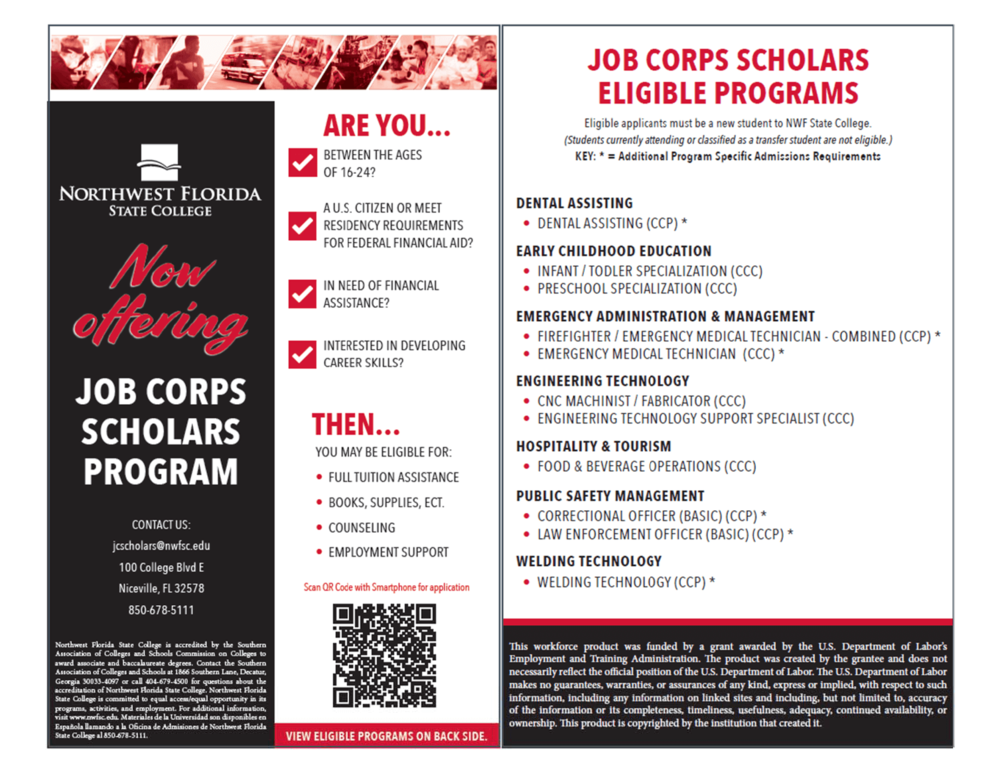
Job Corps Scholars
- Between the ages of 16-24?
- A U.S. Citizen or meet residency requirements for federal financial aid?
- In need of financial assistance?
- Interested in developing career skills?
- Full tuition assistance
- Books, supplies, etc.
- Counseling
- Employment Support
Job Corp Scholars Eligible Programs
- Dental Assisting (CCP)*
- Infant/Toddler Specialization (CCC)
- Preschool Specialization (CCC)
- Firefighter/Emergency Medical Technician - Combined (CCP)*
- Emergency Medical Technician (CCC)*
- CNC Machinist/Fabricator (CCC)
- Engineering Technology Support Specialist (CCC)
- Food & Beverage Operations (CCC)
- Correctional Officer (Basic) (CCP)*
- Law Enforcement Officer (Basic) (CCP)*
- Welding Technology (CCP)*
- Firefighter/ EMT (Combined)
- EMT
- Infant/ Toddler Specialization
- Preschool Specialization
- Food & Beverage Operations
Scholarships
- Three (3) $12,000 scholarships over four years to assist with tuition and fees which will also include:
- $3,000 a year for up to three years, as a summer internship stipend
- Networking opportunities with business and community leaders
Applicants must submit an essay of 750-1,000 words to answer the following questions: "Where do you see yourself in the next four years and how will this scholarship help you achieve those goals?" and "What are you doing now to achieve those goals?"
Is there a student in your home that is a graduating HIGH SCHOOL SENIOR who is preparing to enter college? Are you wondering how are you going to pay for their college education? If you answered "yes", please encourage your student to apply for these scholarships especially for seniors living in Public or Assisted housing (Section 8).
VAWA
The Violence Against Women Reauthorization Act of 2013 (VAWA 2013) expands housing protections for victims of domestic violence, dating violence, sexual assault, or stalking. Changes under VAWA 2013 include extending protections to survivors of sexual assault; allowing survivors who remain in the unit to establish eligibility or find new housing when a lease is bifurcated; providing survivors with emergency transfers; and additional notification to applicants and tenants of housing rights under VAWA. While these changes substantially extend VAWA's coverage to include most affordable housing programs, they provide no protection to tenants in private market-rate housing but do apply to tenants with vouchers in private market-housing.
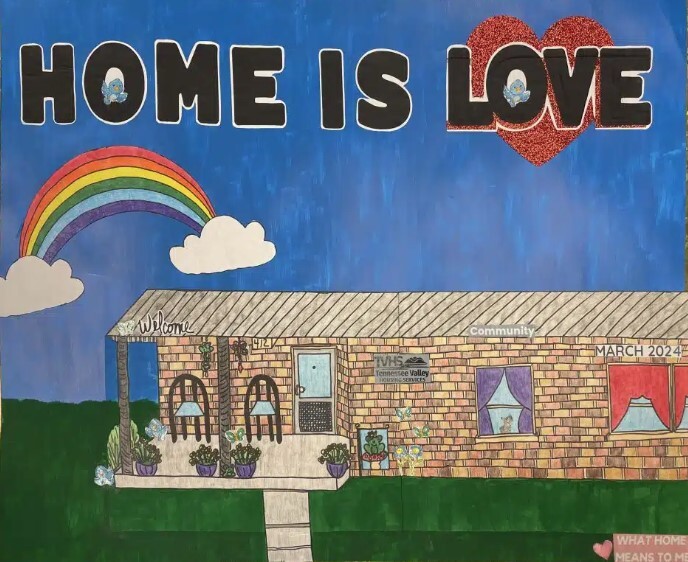
What Home Means to Me Poster Contest
Since 2008, this contest has recognized the amazing art of children who live in affordable housing across the country. Each piece of art visually shares the child's thoughts on what their home means to them. Each year, hundreds of children, ages 5-18, participate in the contest. Their heartfelt messages about their homes underscore the importance of the work that housers and community development professionals do.
Eligibility & Selection Categories
Contest participation is open to all children in grades K-12 residing in affordable housing assisted directly, supported under community development, or participants in affordable housing programs administered by a NAHRO member authority (i.e., public or Section 8-assisted housing CDBG, HOME, LIHTC). If you are unsure of your membership status, please contact Libby Miller.
- Elementary - K to 5th grade
- Middle - 6th to 8th grade
- High - 9th to 12th grade
Poster Specifications
- Theme - "What Home Means to Me"
- Size - All posters must be 22" x 28" and have a LANDSCAPE/HORIZONTAL orientation to be considered for national judging and may be featured in the 2023 "What Home Means to Me" calendar.
- Media - Contestants may use any of the following art media: marker, crayon, paint, or color pencil. Please consider that posters will need to be packaged, mailed, and reproduced. All entries must be mailed flat.
- All contestants must sign a release making their entry the property of NAHRO and permitting duplication/publication thereof. The release should be secured to the back of the entry.
- All regional finalists and national winners must sign a photo release waiver giving NAHRO permission to use their picture for online and print publication.
- All contestants are asked to provide a short narrative on the inspiration, vision, and importance of their poster design. The narrative should be secured on the back of the entry.
- The contestant's name, grade level, age, and housing authority must be written on the back of each poster entry in addition to being listed on the release form also attached to the entry.
- NAHRO is only responsible for returning the original poster to the national grand prize winner. NAHRO is not responsible for returning posters except for the grand prize-winning poster.
- National winners will be selected based on how well the artwork uses the "What Home Means to Me" theme.
- Email Libby Miller a photo of the contestant entering the poster. Photos should be in .jpeg or .png format